
How a Custom Hat is Made
From Measurement to Final Shape
A custom hat isn’t built from a size chart. It’s built from you.
At Weather Hat Co., every custom hat begins with a conversation and ends with a final fitting—where shape, balance, and character come together. Along the way, we rely on time-tested techniques, specialized tools, and a process that values accuracy as much as artistry.
It Starts With Shape — Not Size
Most hats are sold by size alone. Custom hats are different.
Two people can wear the same size and have completely different head shapes—and that difference affects comfort, balance, and how a hat sits over time. Our process is designed to map the exact shape of your head, not just measure around it. If you see our patch, stamp, or brand on your sweatband, rest assured it’s custom—designed to fit you and built to last a lifetime.

The Measuring & Fitting Process
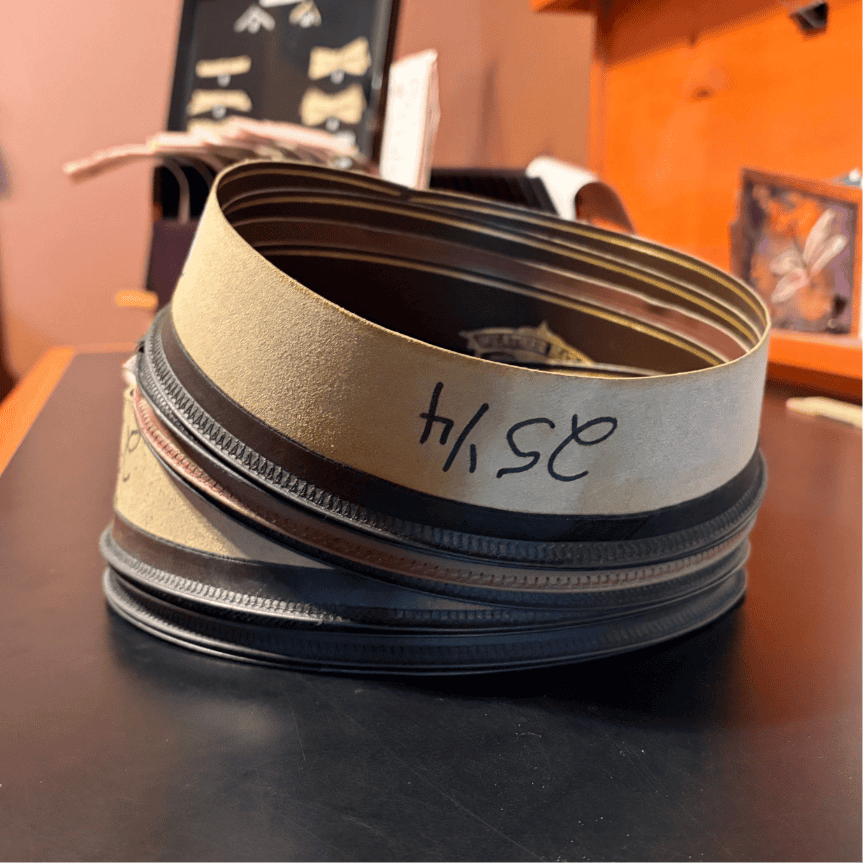
01. Precision Sweatband Measurement
The first step is measuring the inside circumference where the sweatband will sit. This measurement is taken carefully—down to ⅛ of an inch—to ensure comfort, stability, and long-term wear.
This isn’t about being “close enough.”
It’s about getting it right.
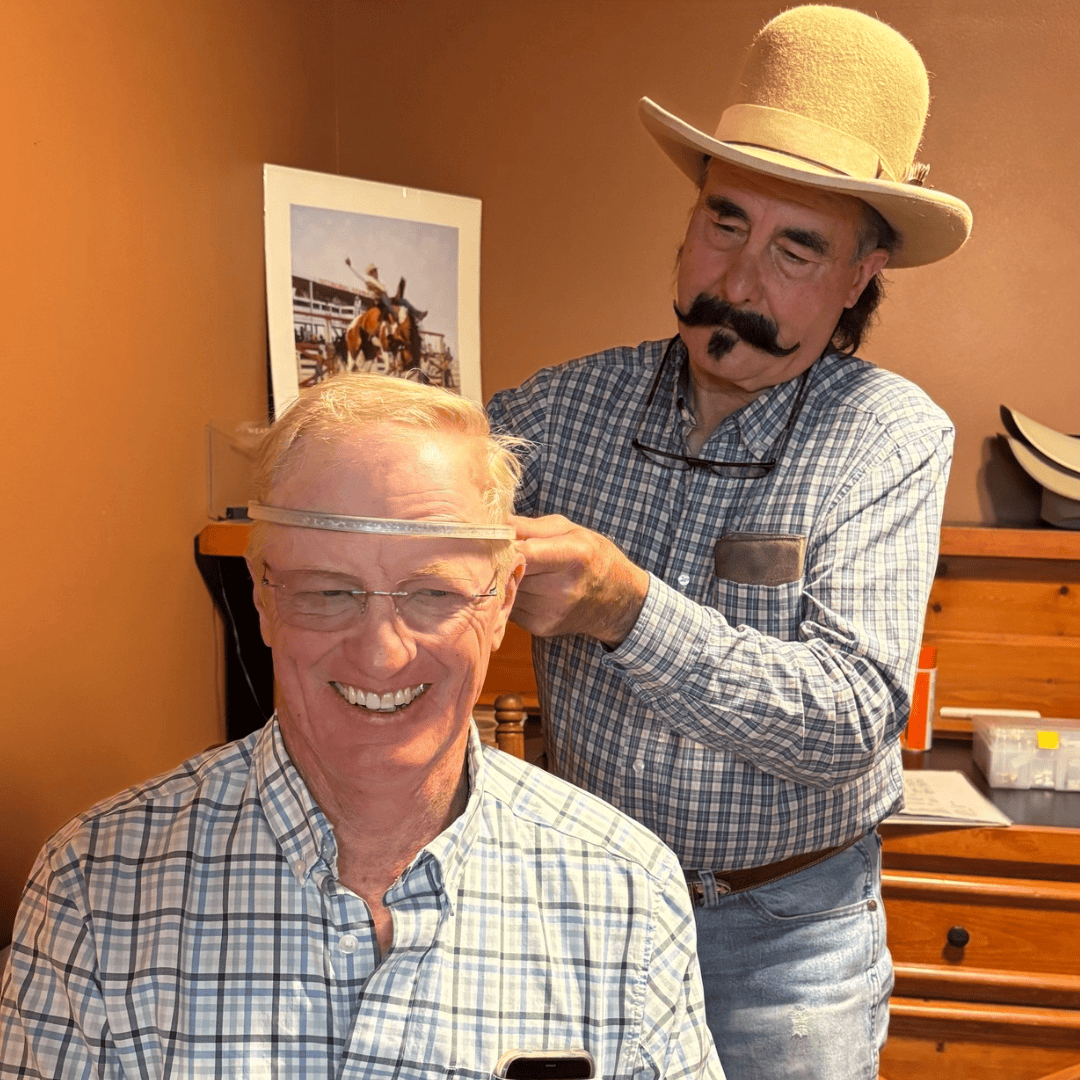
02. Head Shape Mapping
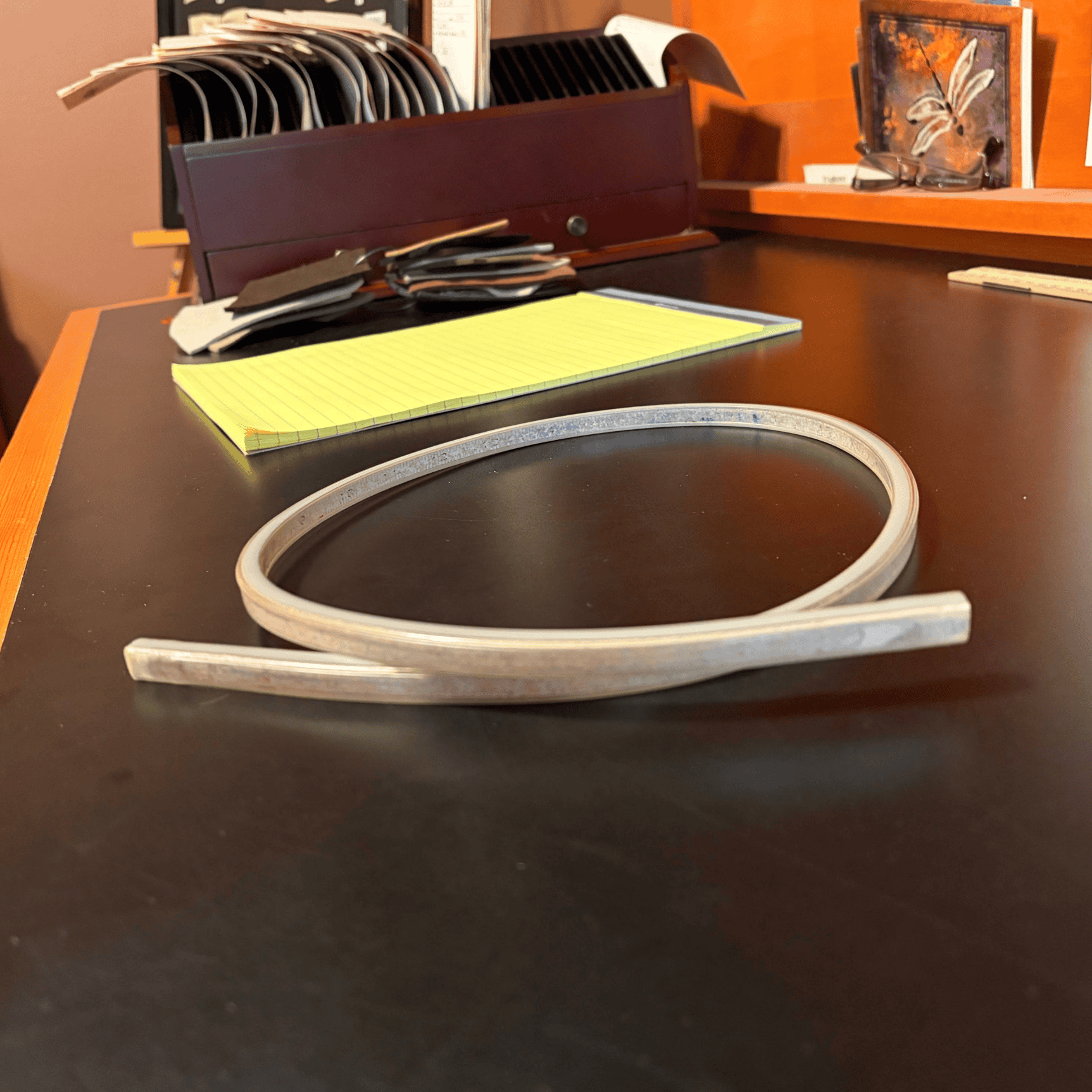
Using a firm architect’s ruler, the outline of your head shape is traced and recorded. This step captures subtle variations that standard sizing can’t—front-to-back balance, side-to-side differences, and pressure points that affect how a hat truly feels.
This step measures shape, not size.
That distinction is the foundation of a proper custom fit.
03. Shape Transfer
The recorded outline is transferred onto paper, creating a physical reference of your unique head shape. This becomes the blueprint for everything that follows.
Think of it as a fingerprint—specific to you, and impossible to replicate by guesswork.
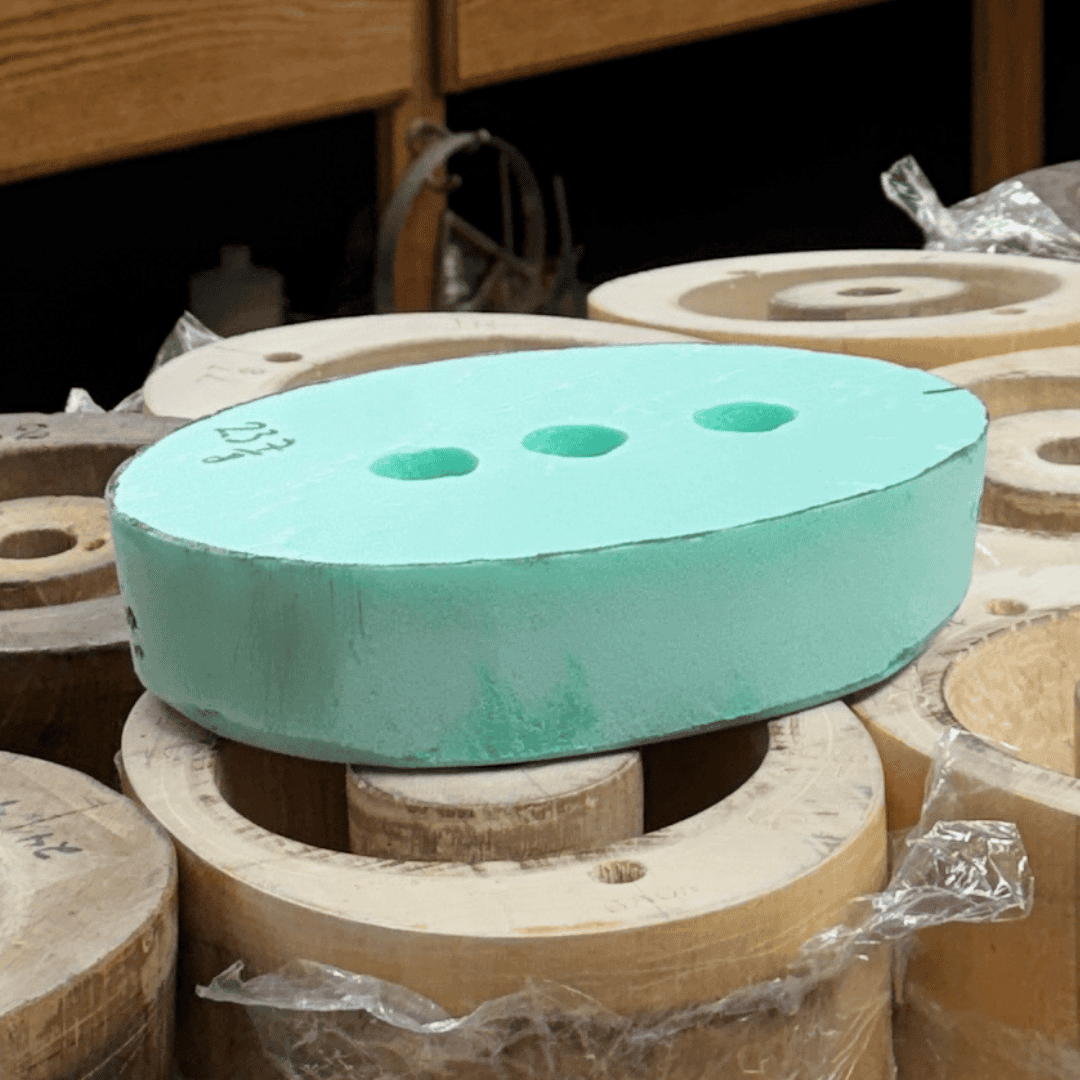
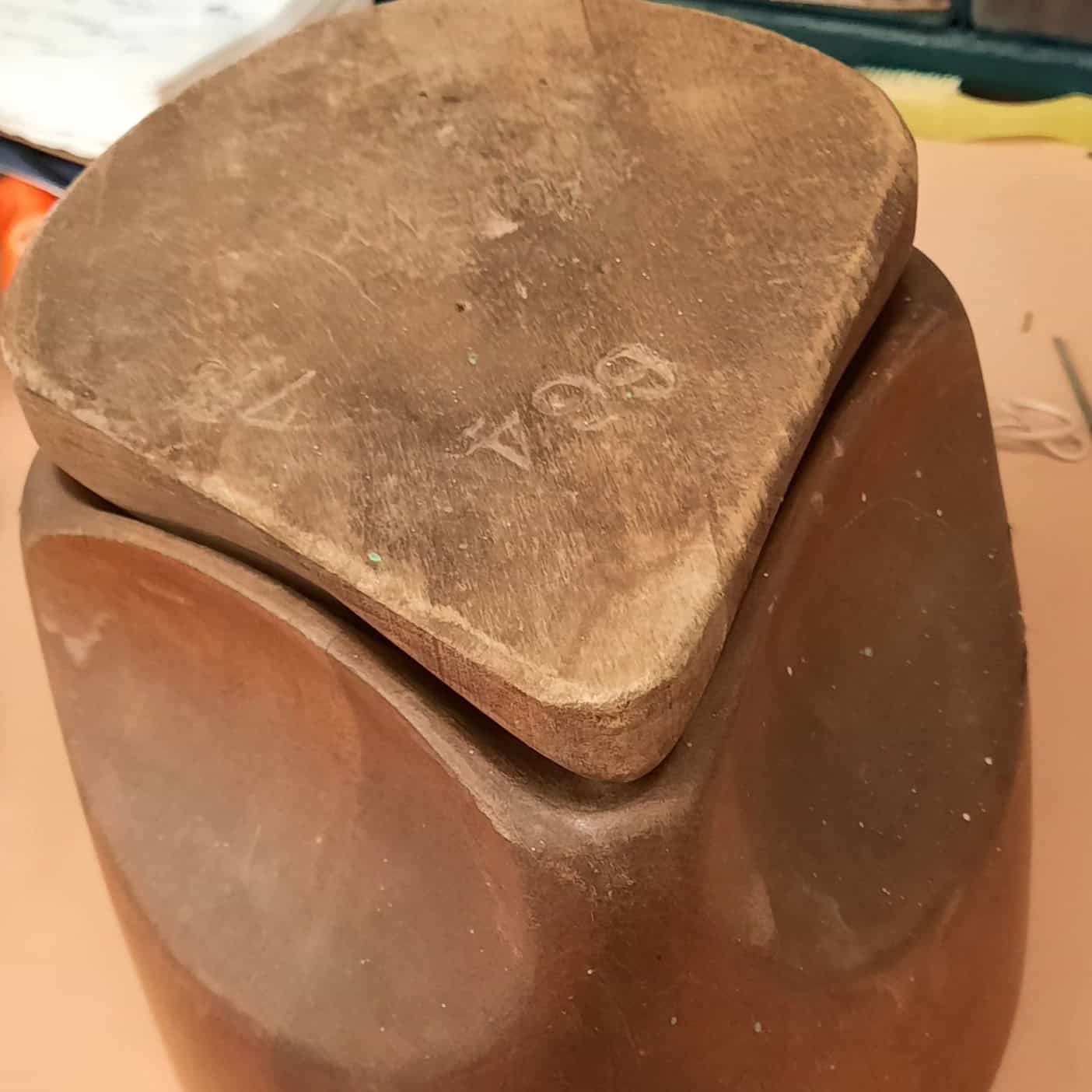
04. Custom Foam Head Block
From that paper shape, a custom foam head block is created. This block represents your head—not a hat style—and is used throughout the shaping and fitting process.
Your foam block is:
• Used during construction
• Referenced for fit checks
• Stored for future hats
If you return for another custom hat, we don’t start over—we start where we left off.

05. Choosing the Wooden Hat Block
With your head shape established, Jack selects a wooden hat block that best matches your measured size.
These wooden blocks define:
• Crown height
• General profile
• Structural style
They do not define fit.
That’s the job of your foam head block.
The combination of the two—your shape + the wooden hat block—is where custom work truly begins.
06. Pulling the Shape From the Hat Blank
Using steam, pressure, and experience, the felt “blank” is pulled over the wooden block and refined by hand. This is where the raw form begins to take on life.
This stage relies on:
• Heat and moisture
• Timing
• A practiced touch
No shortcuts. No automation.
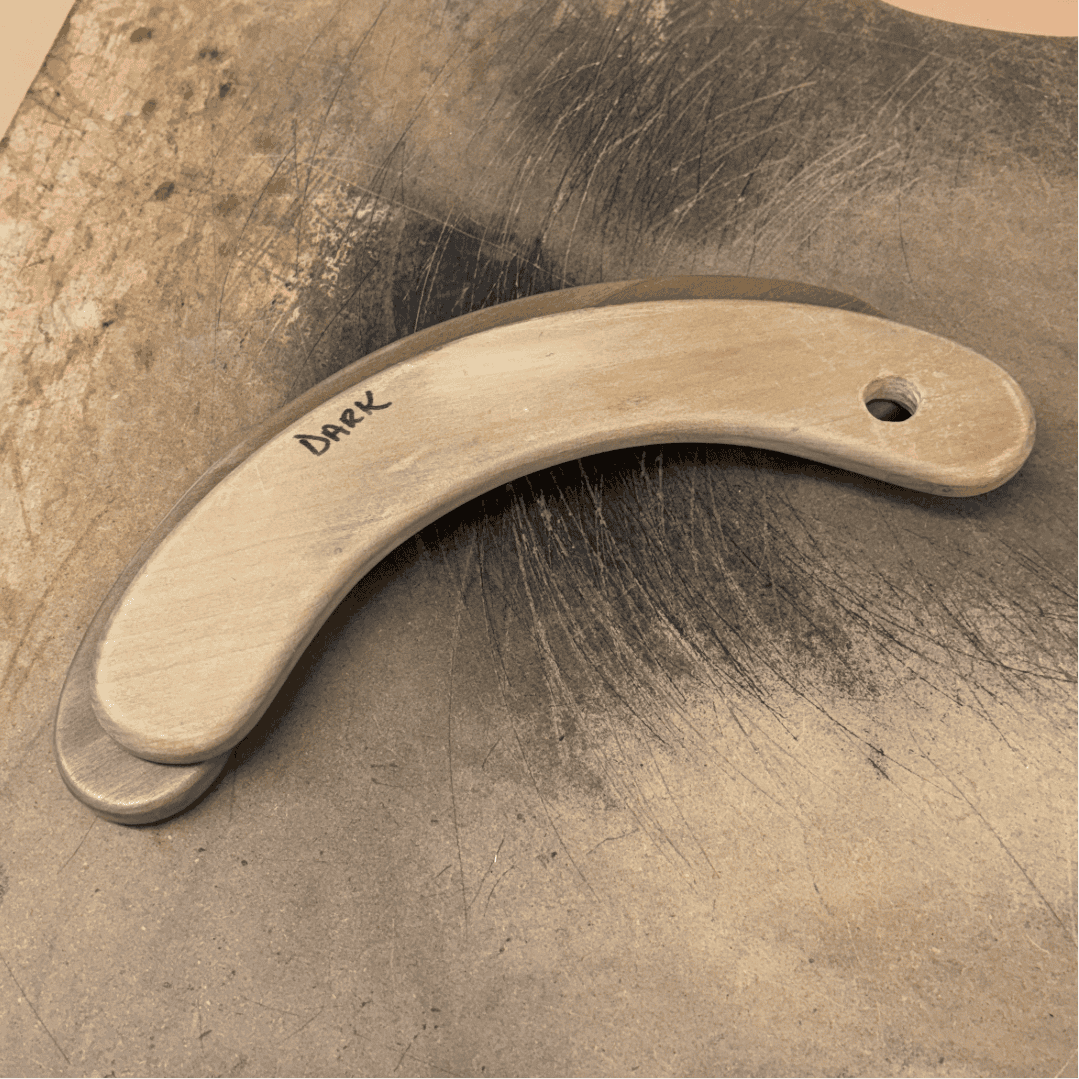
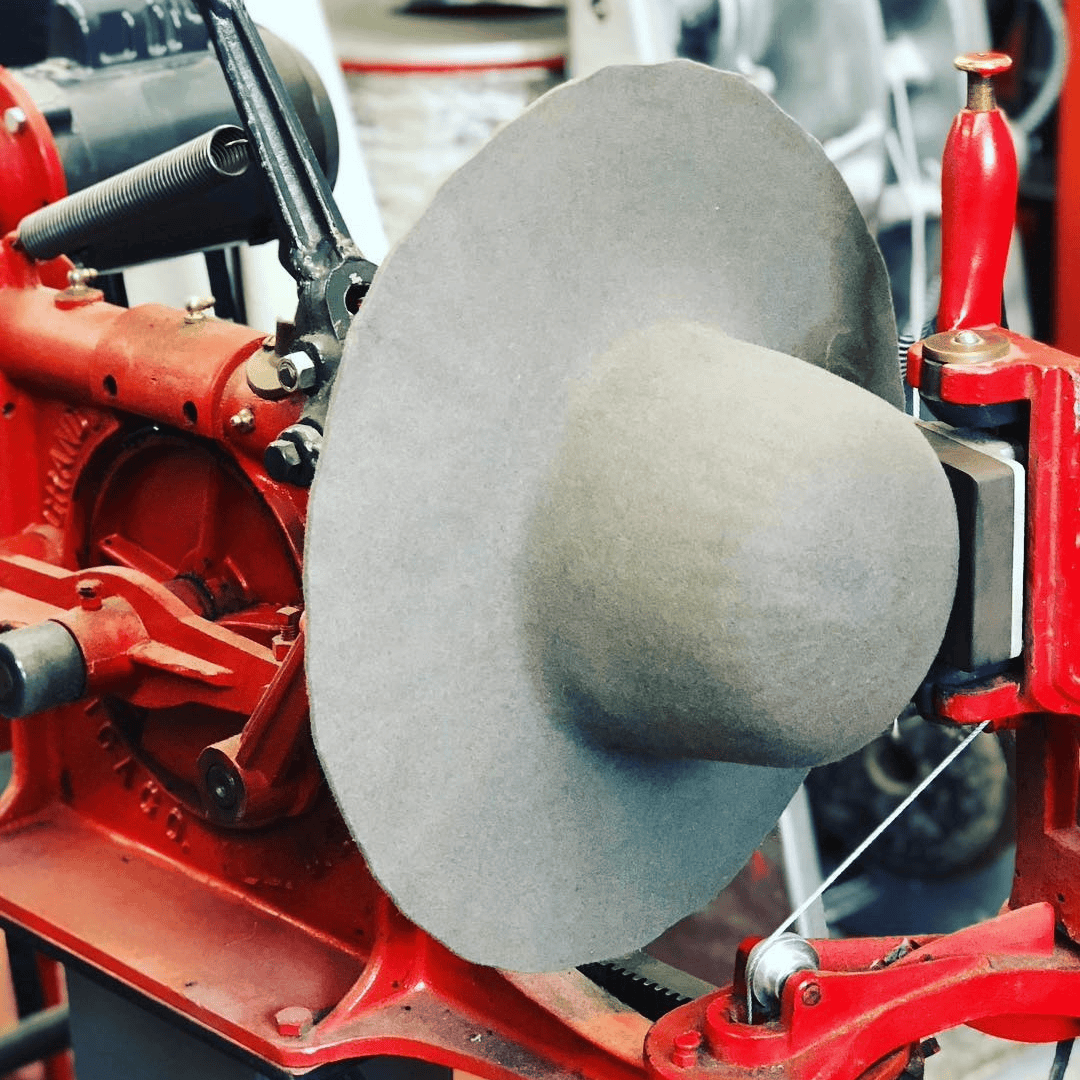
07. Crown Ironing
Before shaping begins, the crown is carefully ironed to smooth the felt and even out the surface.
Steam and heat are used to relax the fibers, remove minor imperfections, and bring consistency back to the crown after blocking. This step helps refine the hat’s structure and prepares it for the more detailed shaping work that follows.
Think of this as resetting the material — getting everything clean, smooth, and ready before the real character is introduced.
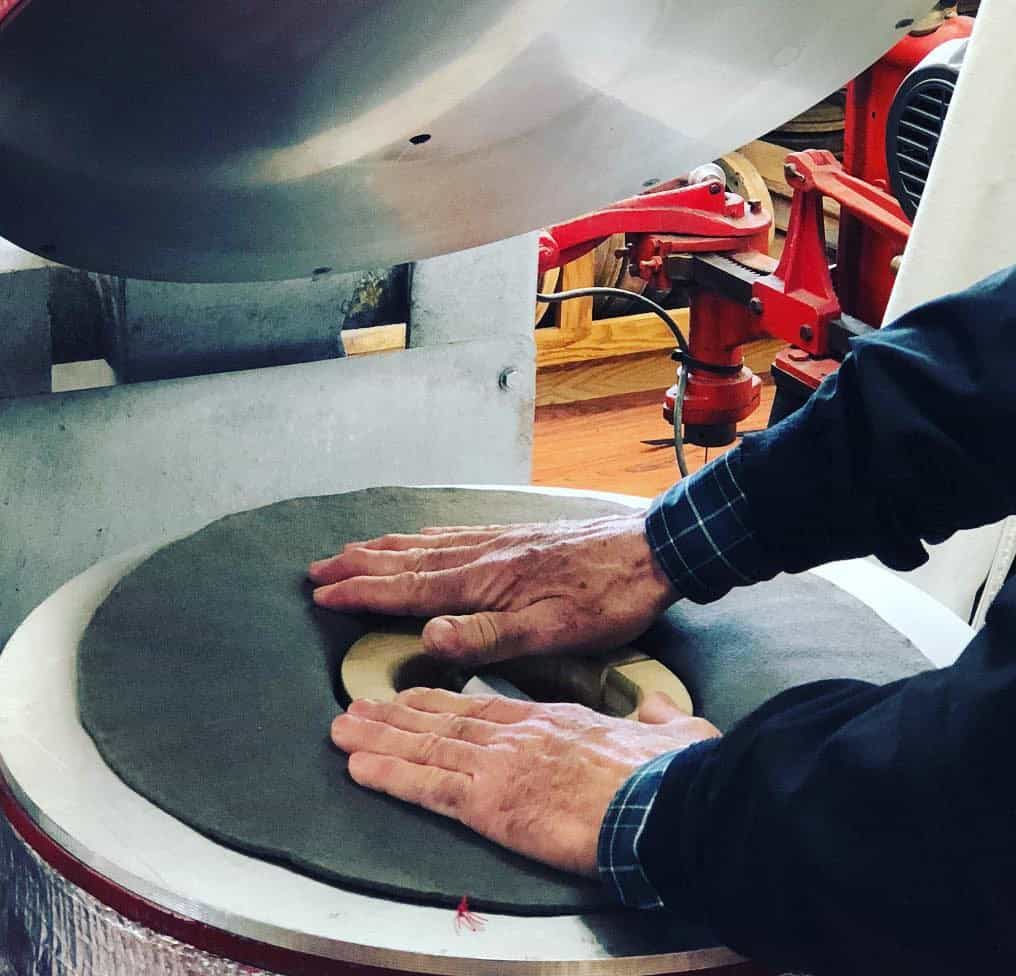
08. Plating the Brim
At this stage, the brim is plated — pressed flat under heat and pressure to help set the starch in the felt.
Plating serves two important purposes: it locks in structure and pulls out any remaining ripples or wrinkles from the felt. A well-plated brim creates a stable foundation, ensuring the hat holds its shape and responds predictably during final shaping.
This step isn’t about style yet — it’s about control and longevity.
09. Crown Shaping — Where the Art Lives
This is where the art of custom hat making truly comes to life.
Using steam, hand tools, and years of experience, Jack shapes the crown to the chosen style — adjusting lines, depth, and transitions by feel as much as by sight. No two heads — or hats — are exactly alike, and this stage allows subtle refinements that machines simply can’t replicate.
This process takes time. It’s deliberate, hands-on work that gives each hat its personality and balance — long before the brim ever meets the wearer’s face.
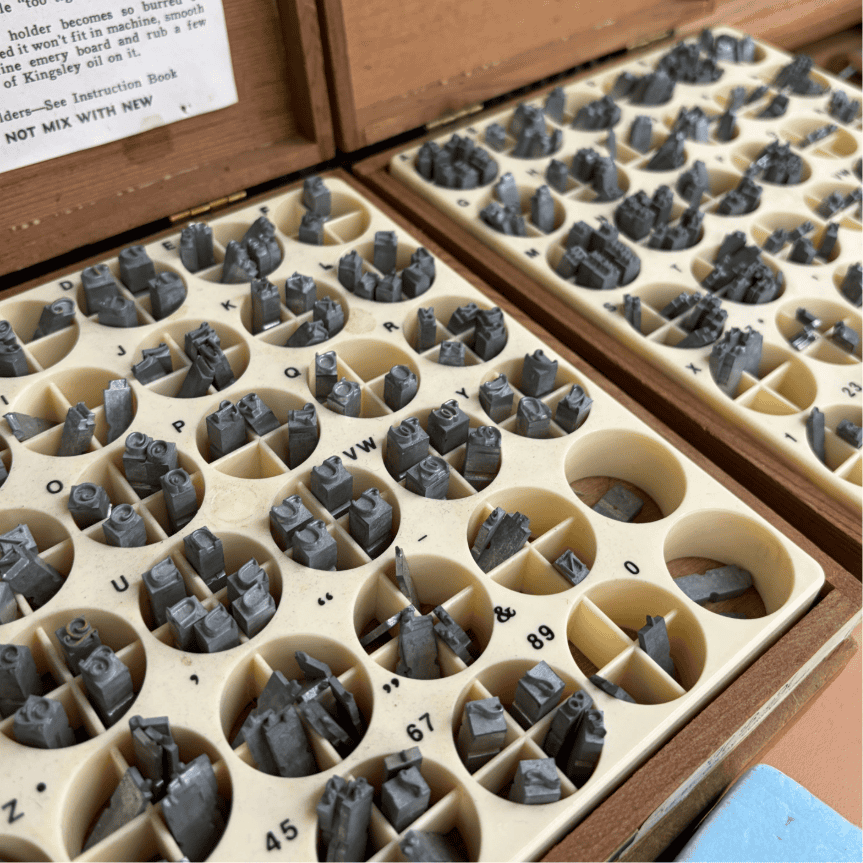
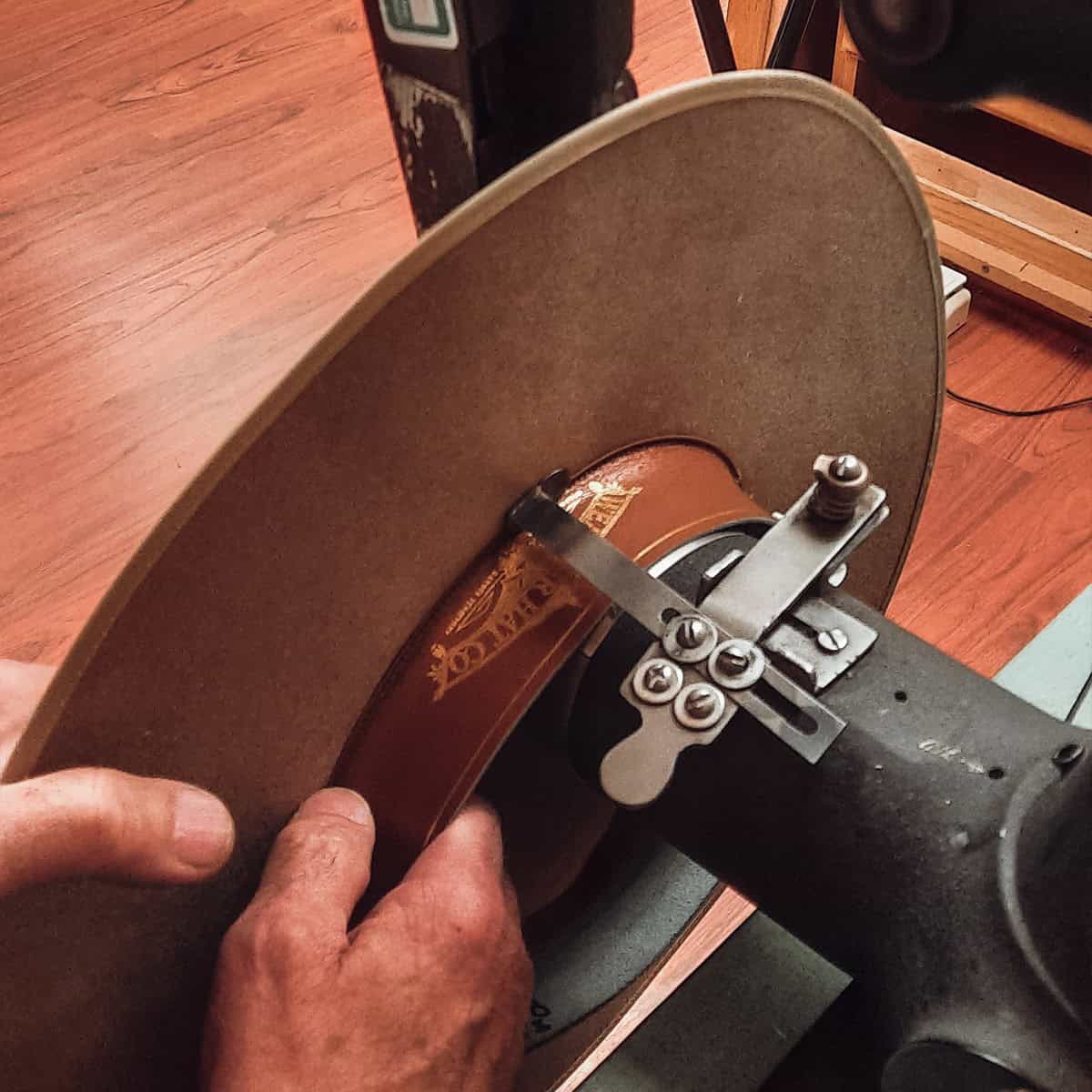
10. Sweatband Stamping & Gold Leaf
The sweatband is embossed and stamped using traditional methods, including gold leaf inlay. It’s a small detail—but one that connects your hat to generations of craft before it.
11. Sewing the Sweatband
Once the structure is set, the sweatband is sewn in by hand. This step locks the fit into place and prepares the hat for final shaping and finishing.
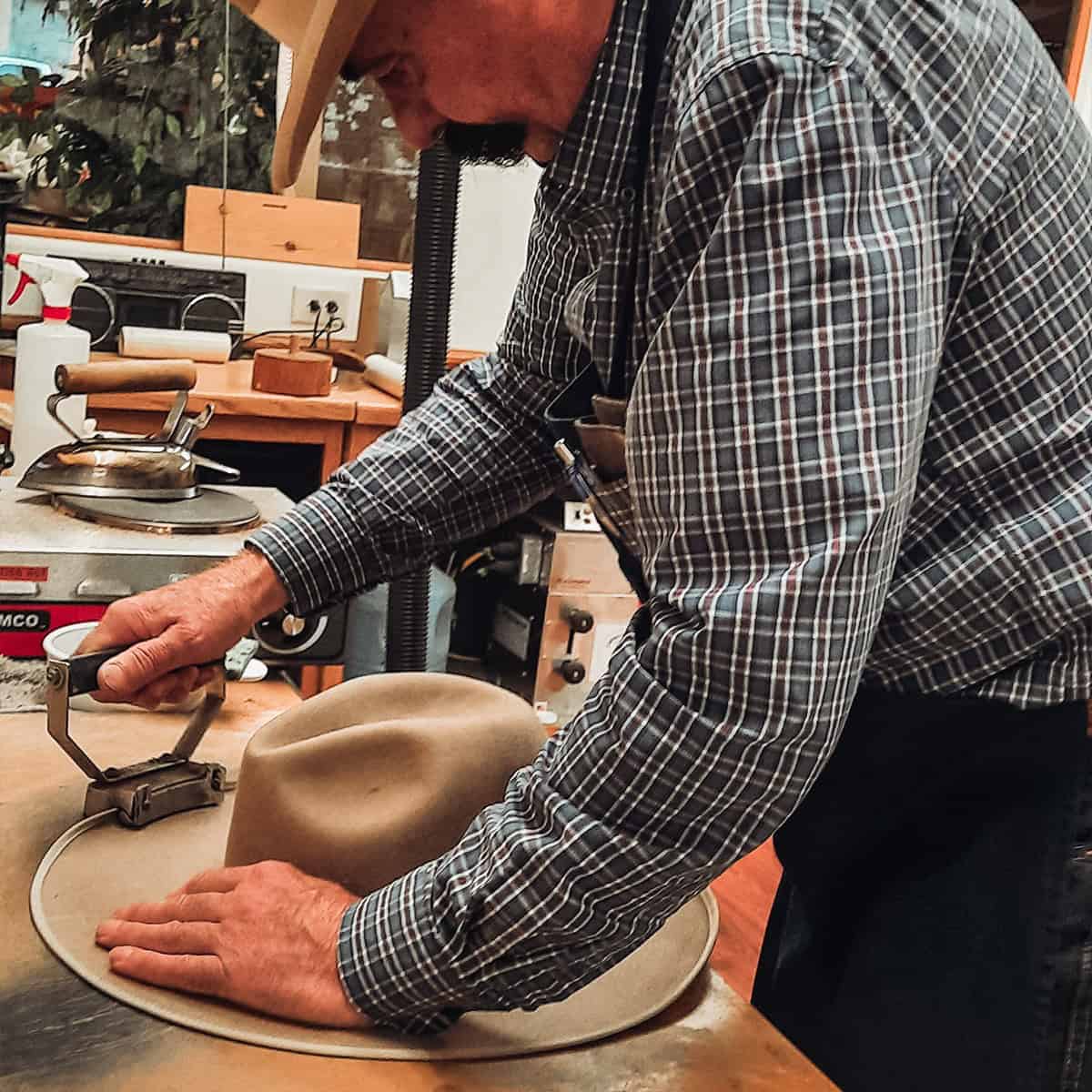
12. Brim Finishing
Depending on the style, the brim may be:
• Left raw
• Bound
• Curled
• Flattened
• Shaped with irons and curlers
Each choice affects how the hat moves, wears, and frames the face.
13. Final Adjustments — The Hat Becomes Yours
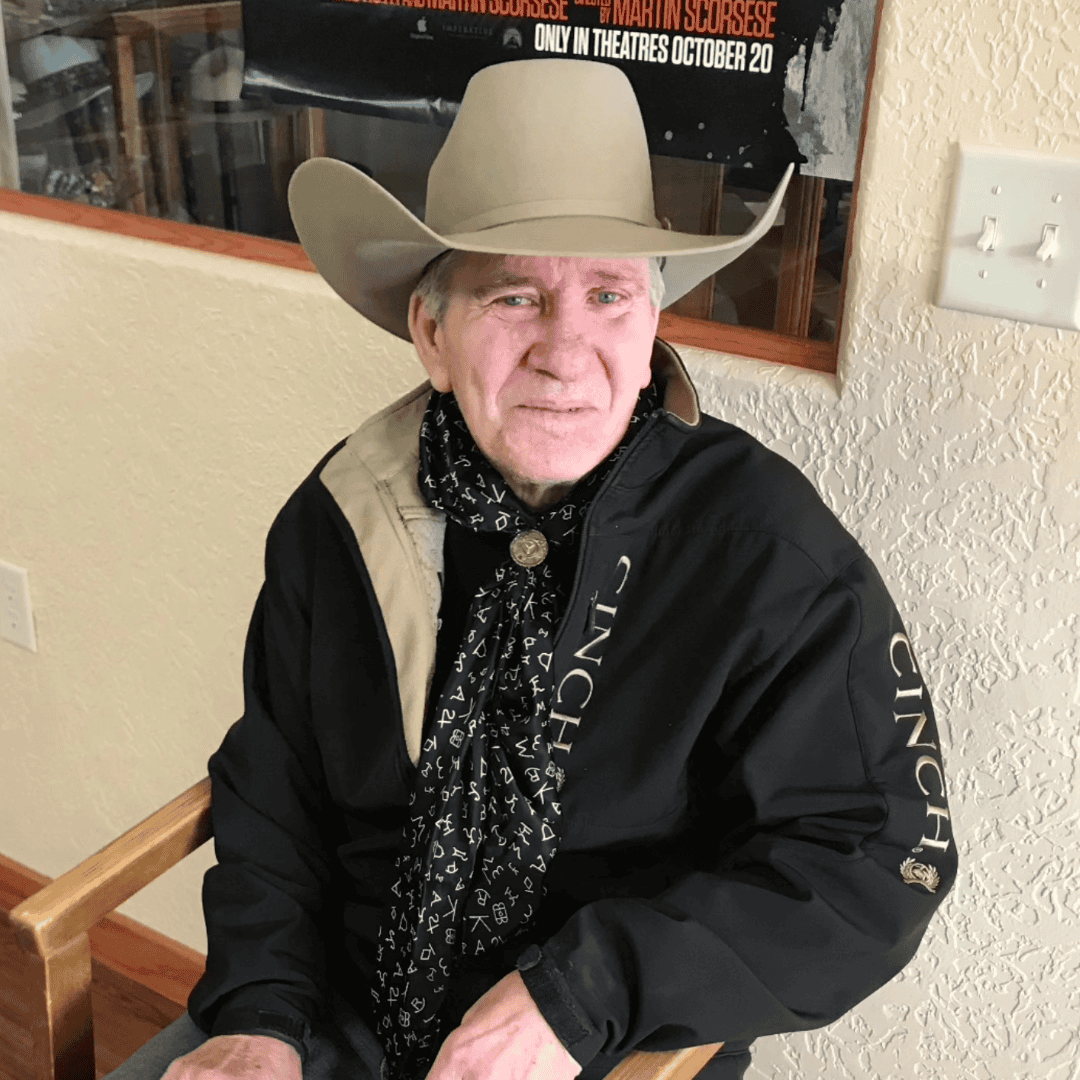
When the hat is finished, you return for the final fitting. This is when Jack shapes the brim to you—adjusting balance, pitch, and curve so the hat complements your face and posture.
This step can’t be rushed.
It’s where a well-made hat becomes your hat.
Tools of the Trade
Vintage Equipment, Still Doing Honest Work
After the process, you’ll notice the machines—many of them decades old, fully functional, and still essential.
Sandbagger
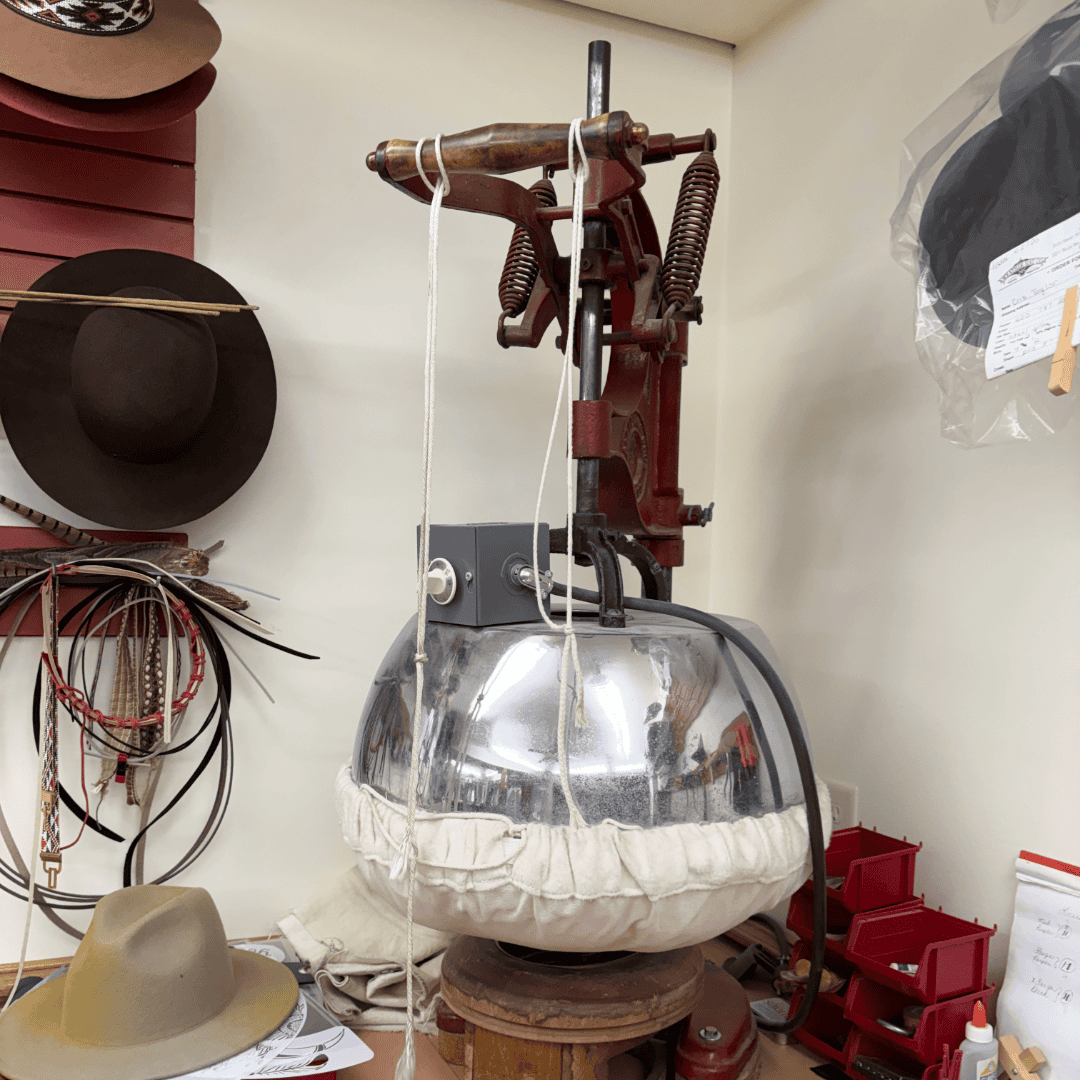
Used to refine open crowns, this machine applies controlled pressure to smooth and shape felt evenly without compromising structure.
Crown Iron
Used to apply even pressure across the brim, the plater helps set starch, remove wrinkles, and stabilize the felt before final shaping—creating a clean foundation for hand-finished brim work.
Brim Iron & Curlers
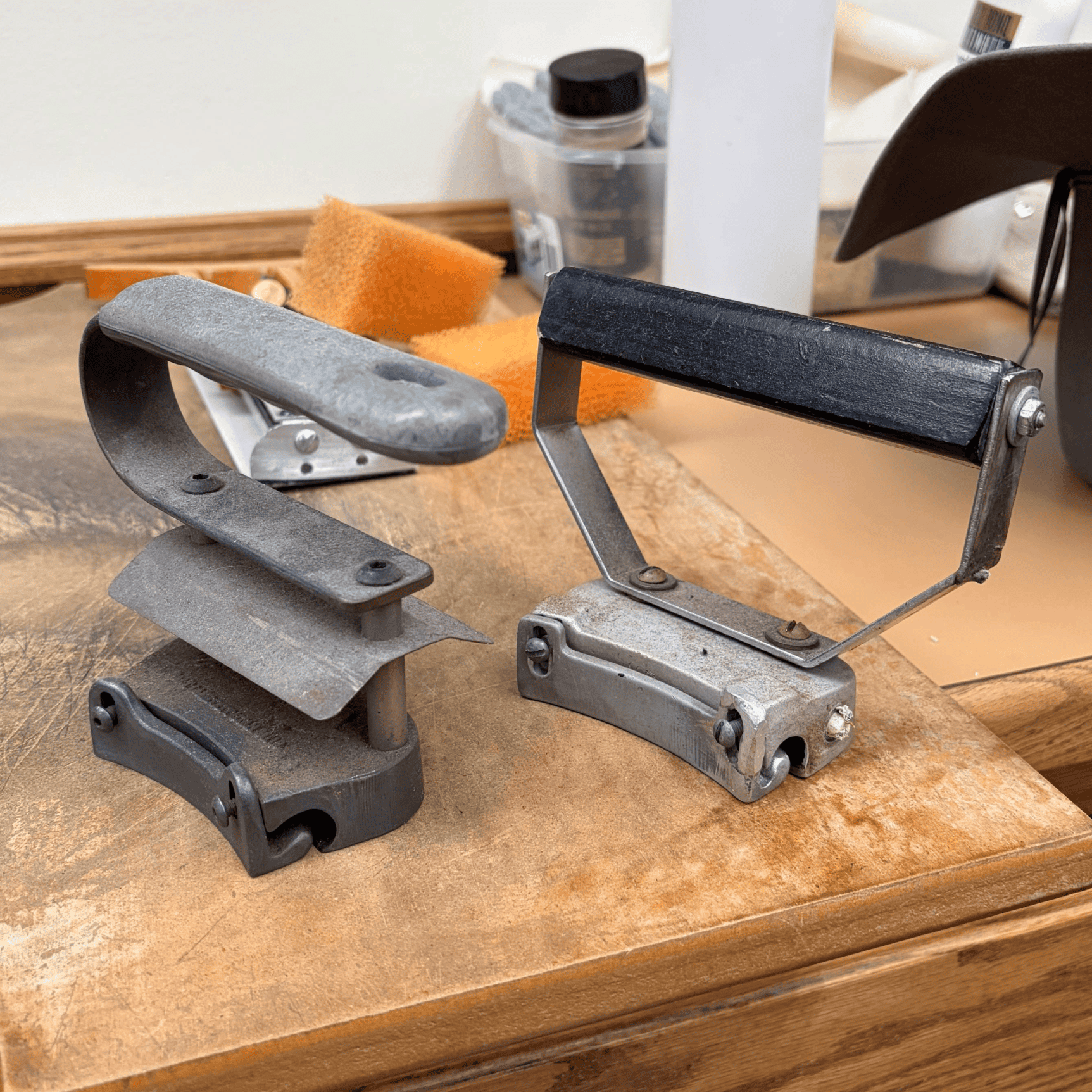
Manual tools used to finish brims with intention, allowing for subtle variation and character that machine-only processes can’t provide.
Sewing Machines

Still running strong, these machines are used to sew sweatbands and finishes with durability and consistency.
Slim Fast Can
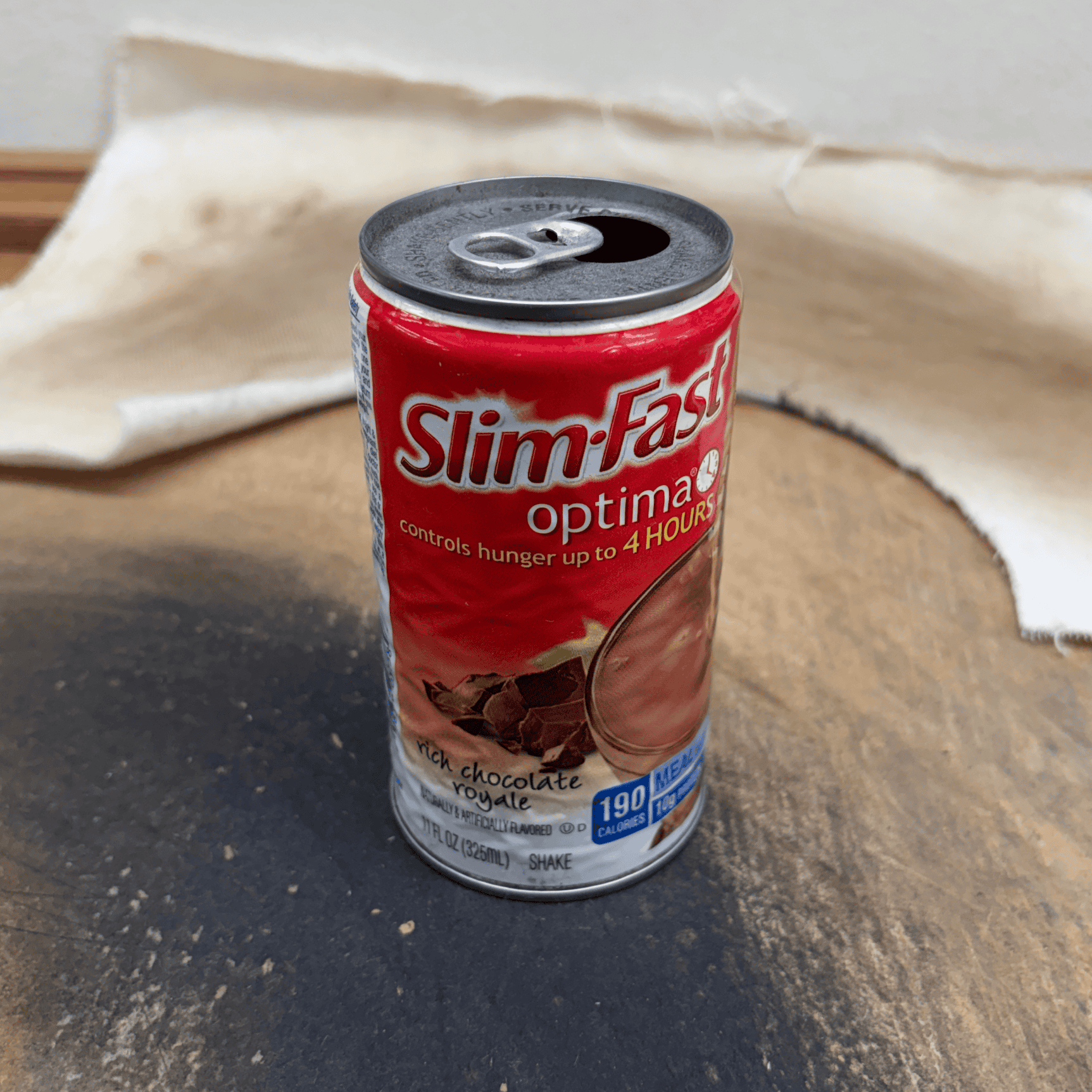
A precision tool used to define crisp lines and transitions in crown shaping—especially important for classic Western and dress styles.
Plater
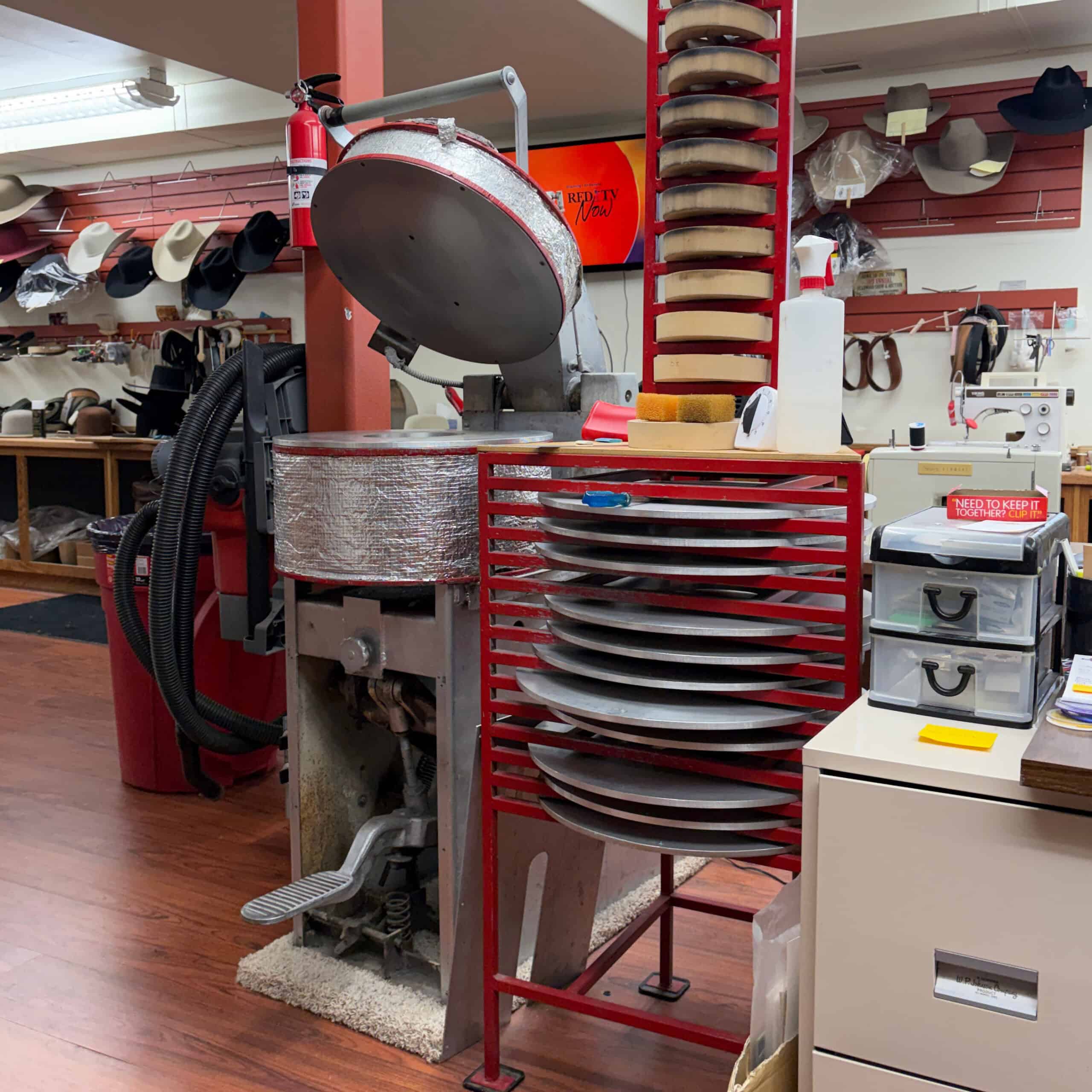
Used to apply even pressure across the brim, the plater helps set starch, remove wrinkles, and stabilize the felt before final shaping—creating a clean foundation for hand-finished brim work.
Each piece has earned its place in the shop—and still earns it every day.
Let’s Talk It Through
Whether you prefer to talk things through or start online, we’re happy to meet you where you are. The Custom Hat Inquiry form lets you share styles and materials you’re drawn to — nothing more.
Final details are always handled in person.